Home
Best Coffee Makers
How to Make Coffee
Single Cup Brewers
Coffee Grinders
Gourmet Coffee
Organic & Fair Trade
Flavored Coffee
Coffee Questions?
Coffee &  Health
Online Coffee Stores
Coffee Drink Recipes
Coffee Reviews
Coffee Photos
Espresso Machines
Beginner's Guide
Coffee Accessories
Newsletter Signup
Coffee Detective Blog
Coffee Search
Privacy & Contact
Friends
 

Can I recycle my Keurig K-Cups?

by Suzanne Dionne
(Woodbury, CT. USA)

QUESTION:

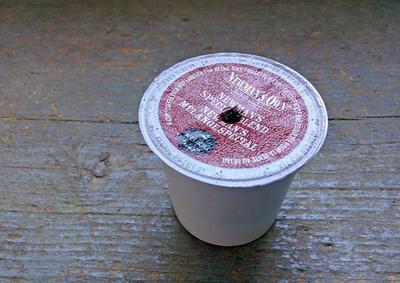
What exactly is the K-cup made of? What grade plastic is it?

ANSWER:

Good question. I have a Keurig brewer myself and have opened up a K-Cup in the hope of being able to find some clue at to whether the plastic is recyclable. But I haven’t found anything – not the recyclable logo, nor a number.

In addition, it's tough separating the plastic cup from the foil lid and the filter material that is attached inside.

I have pretty much given up on being able to recycle the used K-Cups. It's frustrating, particularly when you see quite a pile of them building up in the garbage.

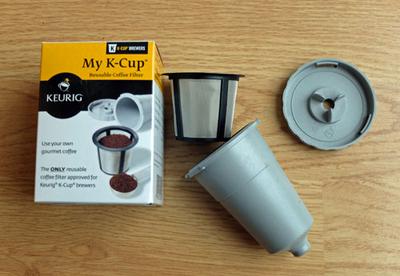
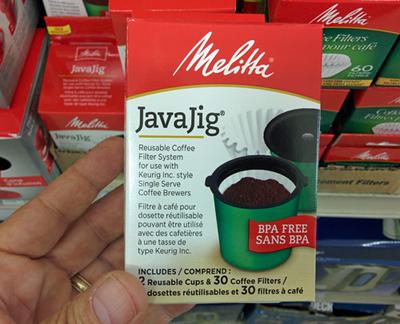
More and more now I use a re-usable filter basket when using my Keurig brewer. After each use I simply pour out the used coffee grinds, (for my compost), wash the filter and use it again next time.

You can get a "My K-Cup" re-usable filter cup for Keurig Brewers here...

Comments for
Can I recycle my Keurig K-Cups?

Click here to add your own comments

Feb 26, 2009
Wonderful Solution!
by: Anonymous

In response to the question about a mesh bag with coffee in it to go in "my-kcup"---

Yes! There is a great coffee named Baronet who makes biodegradable pod that serve this purpose. Check them out online.

Feb 06, 2009
Do your research.
by: Anonymous

"The idea that hot water going through plastic causes cancer is a wife's tale. Check Snopes and you will find that it is false."

And Trans-Fats are actually "cool" fats that don't do any harm right? You really should do your research before you post a misinformed comment that can hurt other people. I like how that one user actually posted a research article.

The K-brewer was probably patented and produced before the issue of BPA emerged and I doubt that the sections touching the water are really BPA free. The Coffee portion is BPA free, but what about the water that's used to make the coffee?

I was going to buy a K-brewer, but will look elsewhere.

Jan 19, 2009
Try My-Kaps
by: Nick (The Coffee Detective)

Someone has come up with a reusable lid that you can use on your K-Cups.

So...once you have used the K-Cup for the first time, you take off the foil lid, remove the used coffee and rinse the filter.

Then you add fresh coffee to the empty K-Cup and replace the old foil lid with something called a My-Kap. Then you put the K-Cup in your brewer in the same way as usual.

Using the My-Kap means you can use the same K-Cup ten or more times.

And you're still filtering your coffee through the original paper filter.

You can buy My-Kaps here...

Jan 19, 2009
paper filter
by: DADEO

What I am looking for is a paper filter that fits into the re-usable K-cup device. The device comes with a mesh filter but that let thru the oils and fine sediment. I form a filter over a medicine bottle and put it in the wire baket and cut off the part that extends over. It works well but there's got to be an easier way. Does anybody know of a filter company that makes one?

Dec 30, 2008
Re: BPA free K-cups
by: Scott M

I contacted Green Mountain also and got this response. The K-Cups are BPA Free. There is some BPA in the brewer itself, but it does not come into contact with the coffee.

I sent them a follow up question, "Does the water that gets super heated come into contact with BPA material?" I am awaiting an answer. My wife will not open the brewer box until this question is answered.

Dec 29, 2008
K-Cups are BPA-free.
by: Nick (The Coffee Detective)

I contacted Green Mountain Coffee regarding the plastics they use in the manufacture of K-Cups, and here is what they told me:

>>The K-cups are a multi-layer composition. PE/EVOH/PS.

The cups are not recyclable...although we always strive for new and better materials.

Regard BPA.....our K-cups are BPA Free. <<

Nick

Dec 28, 2008
Not sure it's false
by: Anonymous

According to Consumer Reports:

-[CR Discussion of bisphenol A]-

...[A] new study, published in the Sept. 17, 2008 issue of the Journal of the American Medical Association, was based on analysis conducted at the universities of Essex and Plymouth in the U.K. and at the University of Iowa. Scientists analyzed U.S. government data (collected from 2002-2004) on urine samples of 1,455 Americans 18 to 74. They found that higher urinary concentrations of BPA were associated with increased prevalence of not only diabetes and heart disease, but of related liver enzyme abnormalities as well. The JAMA researchers note that their results do not prove causation, and independent follow-up studies are needed, but they come in the wake of evidence from animal studies suggesting adverse health effects from even low-dose exposures.

Since Consumer Reports first warned about BPA in baby bottles in 1999, evidence of BPA’s toxic potential has continued to build. In Consumers Union’s statement for the FDA meeting, Urvashi Rangan, Ph.D., Senior Scientist and Policy Analyst, repeated calls for a more scientifically sound assessment and urged the FDA to eliminate BPA in food and beverage containers.

“The safety of BPA, at current exposure levels in the U.S. population, has not been demonstrated and the government is giving consumers contradictory messages about the level of concern,” said Dr. Rangan. “BPA is metabolized quickly and yet constant, elevated levels are circulating in most Americans. This indicates that consumers are constantly exposed to BPA.”

“A margin of safety exists that is adequate to protect consumers, including infants and children, at the current levels of exposure,” Laura Tarantino, a senior Food and Drug Administration scientist, told the expert panel on Tuesday, in remarks reported by the Associated Press.

But in tests conducted for Consumer Reports magazine, BPA has been found leaching from baby bottles and certain types of large containers of bottled water. Studies by other groups have reported elevated levels in canned foods and infant formula.

And the authors of the just-released JAMA study point out that exposure to BPA among the general U.S. population is likely to exceed limits set by the Environmental Protection Agency for the "reference dose," or the daily exposure that is not likely to cause harmful effects.

-[End of quote from CR article]-

I therefore think it is best to be cautious until we have more info from actual researchers - and not just anonymous tipsters on the Internet, who may be plastics workers or investors for all we know, or government officials who might be motivated to protect the industries that lobby them.

I wish Keurigs had paper filters and a non-leaded metal (such as stainless steel) filter holder, so we could enjoy coffee from it. I'm not planning to make any coffee with it for now, because of the plastics / bisphenol A concern.

Dec 25, 2008
Plastic?
by: Anonymous

The idea that hot water going through plastic causes cancer is a wife's tale. Check Snopes and you will find that it is false.

Dec 24, 2008
Carcinogens??
by: Doug

This is all very intersting. I have been drinking Keurig-made coffee for about five years, and never gave this issue any thought until a few days ago. My brother posed the question to me: "Don't you think pouring piping hot water through cheap plastic can cause cancer?" Certainly, you wouldn't put food on a plastic dish and heat it up in the microwave.

My internet search has revealed very little on this, and nothing that I would consider to be academic much less empirical in nature. It does cause me concern, though, especially in that I drink 5 to 10 cups of coffee and tea (the Celestial and Bigelow teas are fantastic!) made from these K-cups each day, every work day, and have done so for many years.

Is anyone out there aware of any scientific studies or lawsuits respecting the foregoing? I'll check back, please let me know, because it stands to reason that maybe I should change my choice of beverage.

Nov 20, 2008
Bisphenol A in Keurig K-Cups?
by: Anonymous2

This echos the previous person's concern but I would like to know if there is any Bisphenol A in the plastic used in making the K-Cups? How can one find out? Lastly, is there any obligation on the part of manufacturers to report the kind of plastic that is being used? It'd be horrible if I was drinking BPA that leeched from the cups!

Nov 02, 2008
Health Status on using a Keurig
by: Anonymous

Does anyone know anything about possible health risks associated with using a Keurig? The water is afterall stored in a hard plastic container...and then you pipe that water through a plastic filter cup at extremely hot temperature...and I think heating plastic is what brings out the carcinogens...right? I mean I hope it's not true(!) But does anyone know anything about the plastics they use?

Oct 14, 2008
Re-use for Keurig K-Cups
by: Cheryl

I plan to reuse at least a few of my K-Cups. I cut the foil top off but left the paper filter in. I will start garden seeds in them for next year. The hole already punched in the bottom will allow for water to drain. We'll see how it goes. If it works out, I will give them out to all my gradening friends.

Click here to add your own comments

Join in and write your own page! It's easy to do. How?
Simply click here to return to Single serve coffee makers


footer for how to make coffee page