K-Cups filled with fair trade coffee – an ecological contradiction.
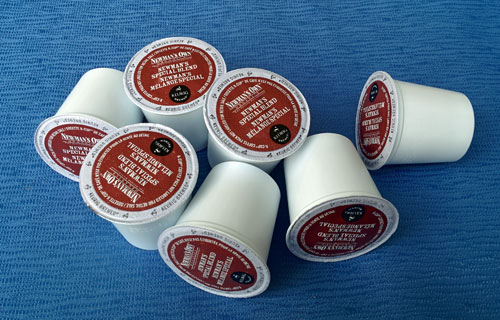
In centuries to come, a thick layer of discarded K-Cups will be unearthed by archaeologists digging through our garbage dumps.
The K-Cup layer will identify the period beginning in 2005.
As they dust off the lids of these spent, discarded cups, one of the archeologists will begin to laugh.
Why? He will have read the faded print on the lid...”Fair Trade Coffee”.
The joke is real.
How can we support responsible, sustainable growing and processing practices with the fair trade coffee system, and then package the coffee in plastic cups which with add to our landfills?
It’s the market, of course...
There is no real surprise here. Corporations will always find way to repackage basic products in such a way as to make more money.
This is exactly what happens with K-Cups and their equivalents.
Ground coffee is prepackaged in the cups and we pay a hefty premium for the privilege. A cup of K-Cup coffee costs in the region of fifty cents.
But of course the real irony lies in the pretence of supporting the cause of social justice by selling fair trade coffee...and then packaging the coffee in such a way that it will add to our own landfills.
Another way to enjoy fair trade coffee...
Fair trade coffee not only pays coffee growers a living wage, but also supports sustainable growing practices.
The fair trade process is complex, requiring that member cooperatives pursue sustaining farming methods. While they are not required to grow their beans organically, they are encouraged to limit the use of agrochemicals.
In addition, cooperatives are paid an additional incentive to grow their coffee organically.
So buying fair trade coffee is a great way not only to support coffee farmers, but also to protect the lands they work on.
And you don’t have to buy fair trade coffee in little plastic cups either.
It’s just as easy, and a great deal less expensive, to buy whole beans, grind them and then brew a single serving either with a French press or a pour-over cone or some other hands-on brewing method.
You'd even do better using a traditional drip brewer like the Bonavita.
In other words, you can do good by buying free trade coffee, without paying through the nose, or contributing mounds of plastic and foil cups to your local landfill by opting for K-Cups.
Further reading...
Find out more about organic fair trade coffee...
More about the gourmet coffee lifestyle page...
About the author: Nick Usborne, aka Coffee Detective, is a writer and long-time coffee enthusiast. Read more…
Before you go, sign up to receive the Coffee Detective Newsletter...
Sign up for occasional newsletters about the best coffees and brewing equipment. Plus special updates from the Coffee Detective Coffee Store…